

Year-End Wrap 2025: From AI Hype to Autonomous Execution
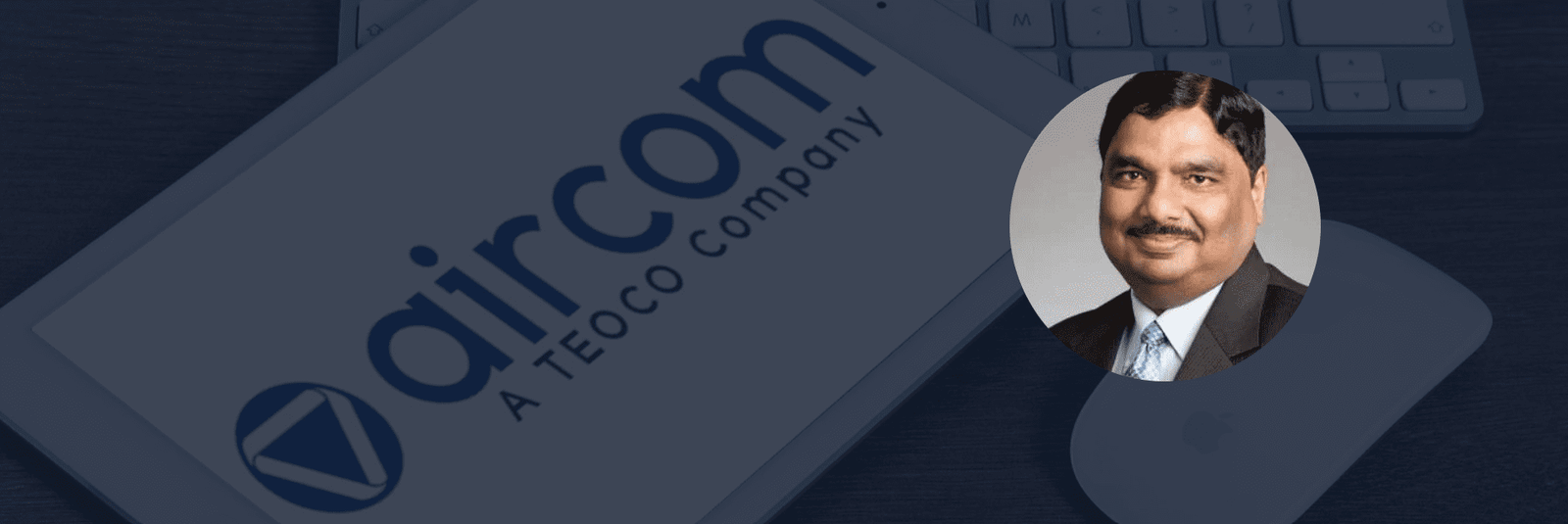
An interview with Atul Jain, CEO, TEOCO/Aircom
As 2025 comes to a close, the telecom industry feels like it’s crossed an important threshold. AI is no longer a slide-deck aspiration. Automation is no longer a collection of scripts. Operators are asking a sharper, more operational question:
How do we turn complexity into reliable execution—at scale, with governance, and with confidence?
We sat down with Atul Jain to reflect on what changed in 2025, what Aircom learned while working alongside customers, and why the next era belongs to teams that can connect AI, automation, and orchestration into a single “execution fabric.”
Atul, when you look back at 2025, what stands out most?
Atul Jain: Two things come to my mind.
First, the industry became more honest about complexity. Networks aren’t getting simpler. We have multi-vendor RAN. More bands. More parameters. More layers of tooling. More stakeholders. And everything is expected to run with higher quality, lower cost, and faster timelines.
Second, AI moved from being something people talked about to something they demand. Customers are asking for AI solutions that are repeatable, explainable with a built-in safeguard to operationalize.
You’ve written before about building teams and culture. How did that show up in 2025 across the broader Aircom teams—sales, delivery, product, and engineering?
Atul Jain: What I’m proud of this year is how the entire Aircom organization—sales, delivery, product, and engineering—operated as one team with a shared focus on customer outcomes. When you’re working with operators, the handoffs matter. Promises made in the sales stage have to translate into delivery; delivery feedback has to shape the product roadmap; and engineering has to build with the right balance of speed, quality, and operational rigor.
We’ve been intentional about creating a culture where teams stay close to customers and close to each other—so we can move quickly without losing the required discipline.
And when it comes to AI, automation, and orchestration, that cross-functional approach becomes even more important. These aren’t “features” you ship in isolation—they’re capabilities that have to fit real workflows, real constraints, and real governance. The progress we made in 2025 is a direct result of Aircom teams pulling in the same direction.
Let’s talk about AI specifically. What did you see change in customer expectations this year?
Atul Jain: There’s more maturity now. Customers aren’t asking, “Do you have AI?”. They’re asking:
- What decisions does your AI support?
- What data does it depend on, and how clean is that data?
- Can it be governed by policy and engineering rules?
- Can we validate what it did?
- Can we roll it back safely?
- Can it fit into our existing processes?
That’s a healthy shift. AI becomes valuable when it becomes operational—when it’s embedded into workflows, guarded by rules, and supported by governance. That’s what creates the ROI.
We are planning to bring some exciting AI offerings in 2026 that will help the operators reduce friction in their radio planning and optimization functions.
Some people worry that AI and automation will replace engineering judgment. How do you think about that?
Atul Jain: I think the framing is wrong.
In telecom, the goal isn’t to remove judgment—it’s to elevate it.
Great engineers should spend time on high-value decisions, not repetitive validation, manual cross-checks, chasing configuration drift, or reconciling inconsistent data across systems.
AI and automation are at their best when they do two things:
- Reduce the burden of repetition
- Increase confidence in execution
If we can help teams move from “manual firefighting” to “governed execution,” we’re not replacing expertise—we’re making expertise more impactful.
What message would you share with customers and partners as 2025 closes?
Atul Jain: Thank you—for the collaboration, the feedback, and the trust.
We are entering an era where networks must be run with speed and precision—but also with governance and confidence. That balance is exactly where Aircom is focused.
We’ll keep building: practical AI, real automation, and network orchestration that makes execution safer and faster. And we’ll keep doing it the same way we always have—by bringing great people together around a clear purpose.
Looking ahead to 2026, what themes will define the next chapter?
Atul Jain: I see three themes.
- AI becomes “embedded” rather than “announced.”
The winners won’t be those who talk about AI the most. It will be those who quietly build it into planning, deployment, optimization, and operations—measured by outcomes. - Network Orchestration becomes the execution standard.
As networks and toolchains become more complex, orchestration becomes the system of record for intent, policy, and controlled execution. - Innovation accelerates where product and engineering are tightly aligned.
When product management and engineering move as one—close to customers, disciplined in delivery—innovation becomes a steady rhythm, not a one-time event.
We’re investing heavily in building that rhythm.
How can we help?
For over 30 years, Aircom has helped network operators run state-of-the-art mobile networks and profitable businesses. Learn how we can help you in the areas critical to the success of modern CSPs.