
Why Agentic AI Needs a Geolocated Network Data Platform
Specialized autonomous RAN optimization agents don’t optimize radio access networks on their own—they optimize them by interpreting data. They analyze network events, correlate performance indicators, understand subscriber behavior, and determine the most appropriate action to take next. Every autonomous decision is only as reliable as the data that supports it.
Can an AI agent make the right engineering decision if it doesn’t know precisely where a network event occurred?
For years, operators have focused on collecting more network data. But autonomous optimization agents don’t need more data—they need data that is contextualized, correlated, complete, and trustworthy.
Context transforms isolated network observations—such as network events, performance measurements, subscriber experiences, and configuration changes—into engineering evidence by correlating what happened, where it happened, when it happened, and how it affected the network and its subscribers. This enables AI agents to move beyond detecting anomalies to understanding their root cause and determining the most appropriate optimization action.
An optimization agent continuously gathers evidence from multiple sources, such as Performance Management (PM) KPIs that reveal network trends, call traces that expose subscriber behavior, configuration data that describes how the network is built, and inventory data that provides the physical context. Individually, each dataset tells only part of the story. By correlating these data sources, the agent builds an accurate understanding of network conditions and determines the most appropriate action.
The common context that enables this reasoning is location, combined with complete and trusted data. Network issues are rarely known in advance, making it impossible to predict which subscribers, cells, or events will become relevant during an investigation. To reason with confidence, AI agents must have access to continuously collected and reliably geolocated data across the entire network—for all subscribers, all cells, and all time periods.
Every event, KPI, configuration change, and subscriber experience must be reliably geolocated so the agent can correlate observations from different data sources into a single view of the network. Trusted geolocation, combined with comprehensive data collection, transforms isolated observations into engineering evidence, allowing AI agents not only to detect anomalies but also to understand their root cause, recommend the optimal corrective actions, and make confident optimization decisions.
Why does Agentic AI require a single source of network truth?
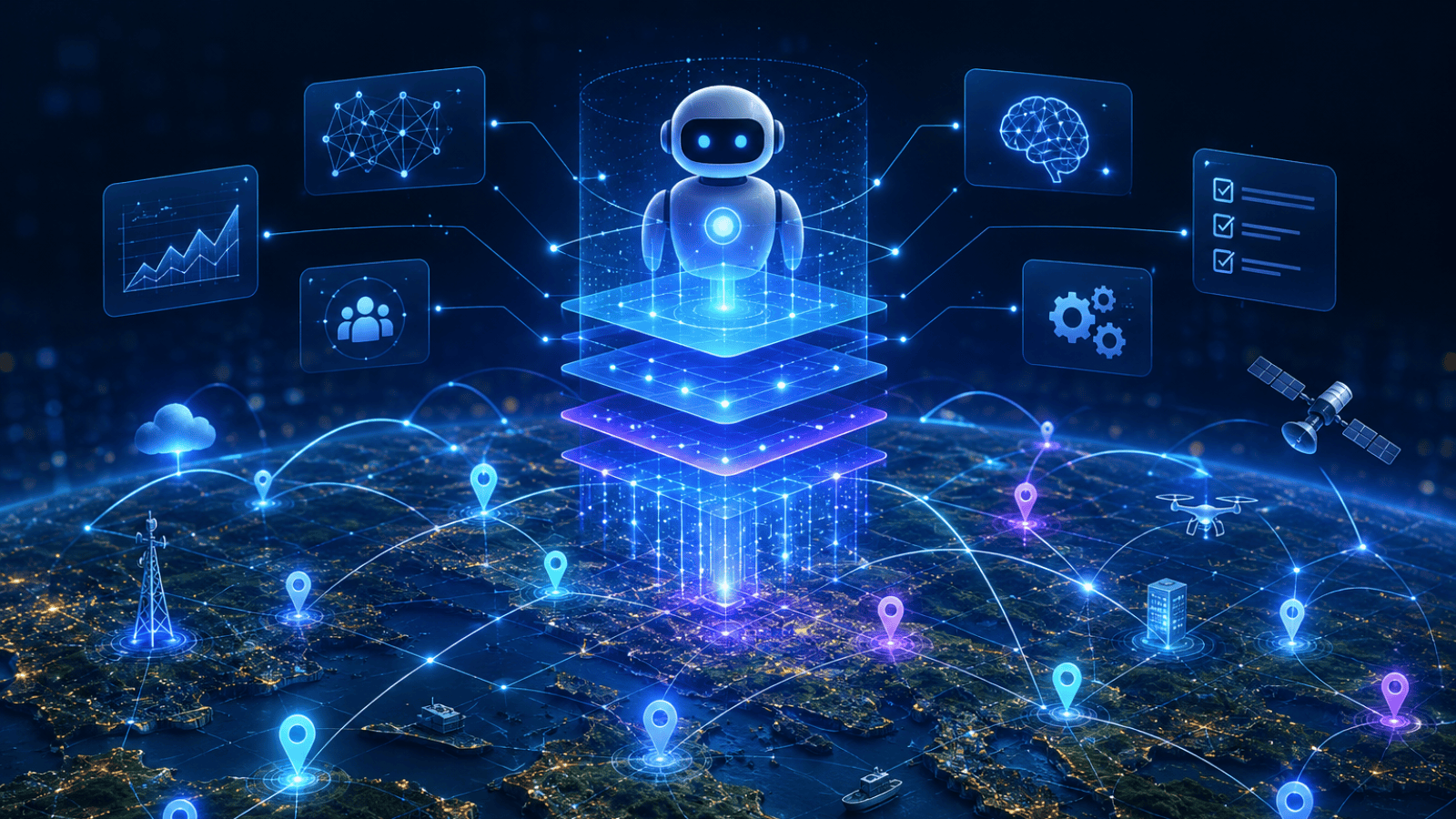
The next generation of autonomous networks will not rely on a single AI model. Instead, they will consist of specialized agents, each responsible for a specific engineering domain—optimizing coverage, diagnosing interference, validating site deployments, investigating subscriber complaints, planning capacity, or assuring service quality.
Each agent requires different data to perform its task. A coverage optimization agent relies on engineering KPIs and network events. A customer experience agent needs subscriber-level insights. A planning agent depends on traffic distribution and demand patterns. Yet despite these differences, every agent must reason from the same trusted representation of network reality.
Without a common data foundation, autonomous agents can reach conflicting conclusions because they are operating on different versions of the truth. Consistent, accurate, and geolocated data enables agents to share context, collaborate effectively, and make coordinated engineering decisions.
As the industry advances toward Agentic AI, the conversation must extend beyond AI models and orchestration frameworks. The real differentiator is the quality, completeness, precision, and context of the data that powers those agents.
What does trusted geolocation actually enable?
This is precisely the role that Aircom Mentor was designed to fulfill.
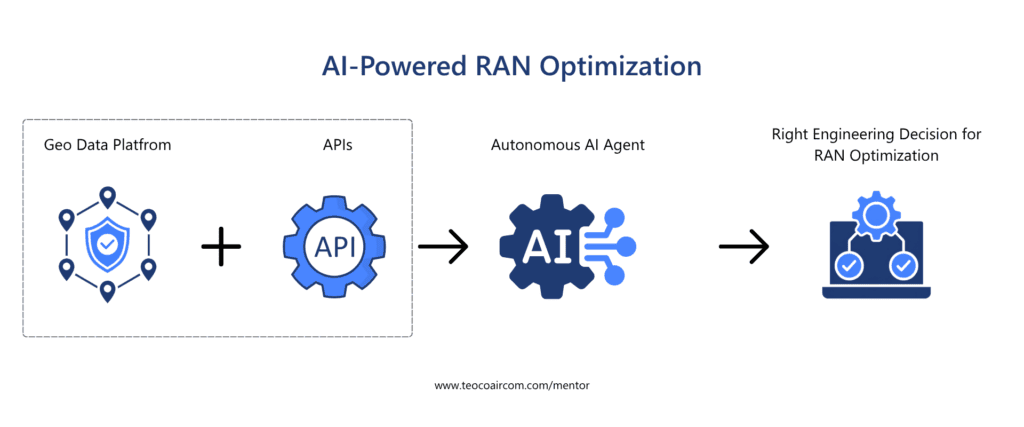
Rather than treating geolocation as a visualization capability, Mentor serves as a geolocated network data platform for Agentic AI. It transforms massive volumes of multi-vendor and multi-technology network data into trusted, correlated, and geospatially enriched intelligence that provides a consistent representation of network reality.
From parsed network events and enriched geolocated measurements to subscriber insights, engineering KPIs, raster coverage maps, and geospatial datasets, Mentor exposes multiple layers of validated information through open APIs. Each specialized AI agent can consume exactly the data it requires while relying on the same trusted data foundation. This ensures that every agent operates from a consistent understanding of the network and produces decisions that are aligned, explainable, and reliable.
That distinction is subtle, but fundamental.
The success of autonomous networks will not be determined solely by the intelligence of their AI agents, but by the quality and consistency of the decisions those agents make. Those decisions depend on a common platform that delivers trusted, complete, and contextualized data before any AI reasoning begins.
It begins with trusted data.
It begins with context.
It begins with trusted geolocation.
How can we help?
For over 30 years, Aircom has helped network operators run state-of-the-art mobile networks and profitable businesses. Learn how we can help you in the areas critical to the success of modern CSPs.