
Digital Twins: The Missing Dimension in Modern 5G Planning
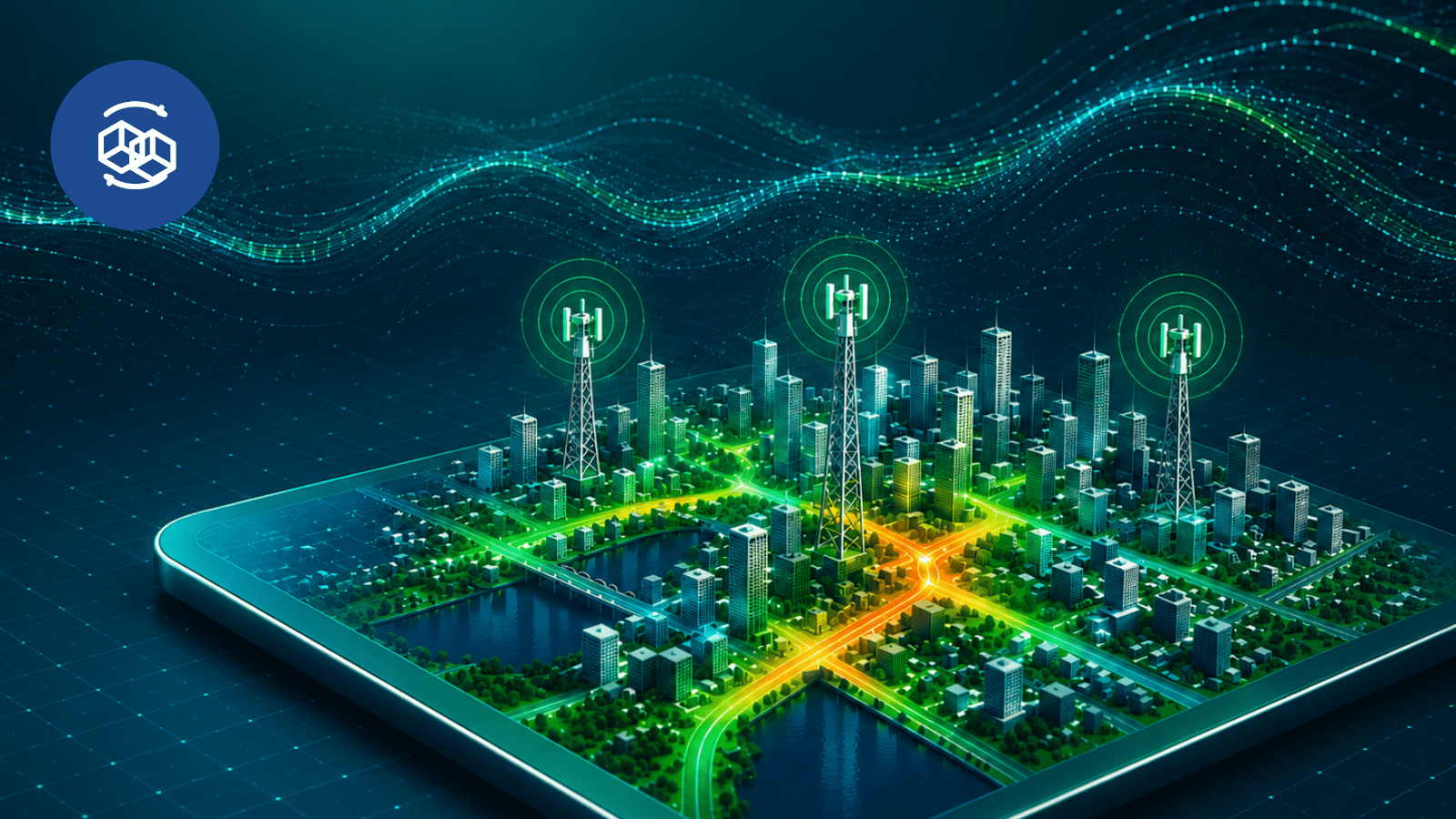
Modern 5G planning is no longer just about predicting coverage.
Today’s planners are expected to evaluate indoor performance, support enterprise deployments, justify densification investments, assess Fixed Wireless Access (FWA) opportunities, and understand how network decisions will affect customer experience.
In other words, planning is no longer just about predicting where coverage will exist. It is increasingly about understanding how that coverage will be experienced.
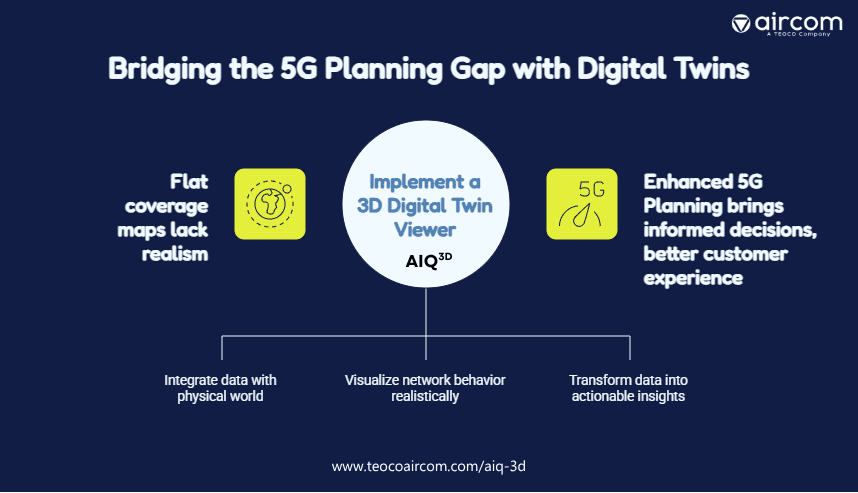
Coverage maps remain one of the most valuable tools available to network planners, providing critical insights into predicted network performance and forming the foundation of modern planning workflows. The downside is they are only flat representations of the real world.
This is where digital twins like Aircom’s AIQ3D are beginning to attract attention across the telecommunications industry.
By combining network intelligence with realistic representations of the physical world, AIQ3D helps planners understand not just where coverage exists, but how it behaves within the environments where customers actually experience the network.
The Context Gap
Consider a familiar scenario. A building appears well covered. Signal levels look healthy. The surrounding network design appears sound. Yet subscribers inside that same building continue to report inconsistent service quality.
The challenge is rarely a lack of planning data. The challenge is understanding how coverage interacts with the physical environment. Building height, construction materials, surrounding structures, antenna placement, and network density can all influence how service is experienced throughout a building.
Understanding those interactions is becoming increasingly important when evaluating indoor coverage, enterprise service quality, densification strategies, and infrastructure investments.
Why Digital Twins Matter
AIQ3D provides a way to bridge the gap between network intelligence and real-world environments.
Rather than viewing coverage solely through maps and layers, these 3D viewers allow planners to explore network behavior within realistic three-dimensional environments. Coverage, infrastructure, and physical surroundings can be viewed together, creating a richer understanding of how network performance is experienced in the real world.
The value is not simply better visualization. It is better decision-making when evaluating:
- Densification strategies
- Indoor coverage performance
- Enterprise connectivity requirements
- FWA deployment opportunities
- Infrastructure investments
- Customer experience challenges
From Digital Twin to Planning Intelligence
By adding spatial clarity to planning intelligence, digital twin technologies help transform network data into something easier to investigate, communicate, and operationalize. The immersive experience enables 5G planners to explore coverage conditions within the buildings and locations where customers actually live, work, and connect.
The common visual framework created by 3D viewers like AIQ3D helps align 5G planners, operations teams, enterprise stakeholders, and business decision-makers around the same understanding of network performance.
Building the Foundation for Autonomous Networks
Autonomous networks depend on more than network data alone. They require an understanding of how network conditions translate into real-world experiences.
Digital twins provide that missing perspective by revealing how coverage, infrastructure, and customer experience interact within the environments operators serve. Platforms such as AIQ3D bring these dimensions together in a single view, helping bridge the gap between network intelligence and operational reality.
In that sense, digital twins may be the missing dimension in modern 5G planning.
How can we help?
For over 30 years, Aircom has helped network operators run state-of-the-art mobile networks and profitable businesses. Learn how we can help you in the areas critical to the success of modern CSPs.